Our third annual virtual round table on the year in webcomics features comments from Gary Tyrrell, Dirk Deppey, Tom Spurgeon, Heidi MacDonald, Brigid Alverson, Derik A Badman, Reinder Dijkhuis, and JT Shea and Scott Gallatin.
For the December issue, we assembled our third annual virtual round table on the year in webcomics. (You can read our previous roundtables here: 2006 and 2005.) Our panel discussion was conducted by email.
Our Panel:
Gary Tyrrell is the lead writer and editor of Fleen, a collector of webcomic and cartoon art, a once and future volunteer with the CBLDF, and a resident of New Jersey. He can often be found in the vicinity of his wife, his dog, or beer.
Dirk Deppey is the online editor of The Comics Journal and author of its weekdaily weblog, Journalista. He was managing editor of the print version for just over two years. He lives in Arizona.
Tom Spurgeon is the editor of The Comics Reporter. He is a former editor at the Comics Journal. He wrote the comic strip Wildwood for King Features from 1999-2002. He is a Sagittarius. His go-to karaoke song is Lucy in the Sky With Diamonds. His favorite elementary school gym activities were parachute, kickball and high jump.
Heidi MacDonald is a well known comics commentator and journalist and the author of The Beat. She has worked for Disney and Warner Bros./DC Comics, editing both licensed characters and original concepts, and currently edits a line of graphic novels for Fox Atomic/HarperCollins. As well as working as a contributing editor for Publishers Weekly, she co-edits the weekly PW Comics Week comics newsletter and has served as a Consultant for the New York Comic-Con. Heidi is also the co-founder and a former board member of Friends of Lulu, an organization for women in comics.
Brigid Alverson is a journalist and the blogger behind MangaBlog. Her work has appeared in Publishers's Weekly Comics Week, Shojo Beat, and Comics Foundry. Her two teenage daughters keep her firmly grounded in reality.
Derik A Badman writes about comics at his blog, MadInkBeard, and is the creator of Things Change, The Metamorphoses Comic and Maroon, A Webcomic in 52 Parts.
Reinder Dijkhuis writes and draws Rogues of Clwyd-Rhan and draws White House in Orbit in collaboration with Norwegian writer Geir Strom. He lives in Groningen, the Netherlands where besides creating comics in a studio he shares with cartoonist Jeroen Jager, he writes at his blog Waffle.
JT Shea and Scott Gallatin host the webcomics podcast, The Gigcast which has been running since 2005. It was recently picked up by Farpoint Media for distribution.
Xaviar Xerexes: ComixTalk does focus on webcomics (or perhaps better to say, comics published in a digital format). So I'll lead off with a very webcomic-specific question. Defining webcomics simply as a comic that is published in its entirety on the web (regardless of where else it's published) what were your favorite five webcomics in 2007? Any favorite new finds for 2007?
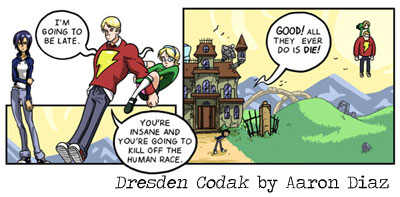 Gary Tyrrell: Five is a tough limit! In no particular order: Dr McNinja, Dresden Codak, xkcd, Little Dee and Sheldon made me happiest this year; they all seem to be on a consistent roll. Favorite finds were Planet Karen (been around a while, but I'm late to this party) and Octopus Pie.
Derik Badman: Cameron Stewart's Sin Titulo has been slowly building tension and interest since it started, I love it's Auster-esque film noir aspect. Lewis Trondheim's Les Petits Riens continue to bring a smile to my face, I'm looking forward to the English edition from NBM so I can get all those French colloquialisms right. I'm not usually reading the most popular things, but xkcd has even got me as a fan. Nick Mullin's Carnivale makes brilliant and innovative use of word balloons. Vulcan and Vishnu by Leland Purvis is perhaps one of my most favorite webcomics. Purvis' sense of pacing and diagrammatic art is brilliant.
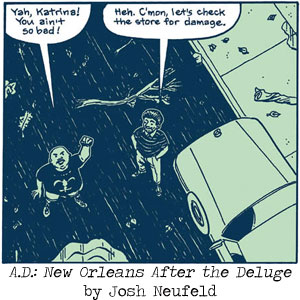
Brigid Alverson: I'm really enjoying two of the stories serialized on Netcomics. Dokebi Bride is a Korean manhwa about a shaman girl who is struggling with spirits. It's a nice story about the way traditional ways mix with modern life, and the art is absoutely gorgeous. The other one, cm0, is a soap opera about a college professor who is involved with a student. I just discovered Nick Mullins this year, and I love Carnivale because he does such a great job of capturing emotions and even events without using words. AD: New Orleans After the Deluge is a jewel of a comic, and it really uses the multimedia capabilities of the internet by adding links to video clips, podcast interviews with the characters, and lot of other good stuff. And Penny and Aggie is just plain good fun.
Tom Spurgeon: I read very few comics regularly on-line and don’t really make distinctions between webcomics-only webcomics and comics that are also in print I happen to read on-line. The ones that I read are pretty standard. Les Petits Riens, Perry Bible Fellowship, Achewood, Cul-de-Sac and Pat Oliphants’s work could be a top five. As for new discoveries, I’m now just diving into what’s out there beyond a real surface appreciation so I’m not prepared to answer that. I did like Sin Titulo.
 Dirk Deppey: I read probably a dozen webcomics a week, not counting manga scanlations. My five favorites are John Allison's Scary Go Round, Chris Onstad's Achewood, R. Stevens' Diesel Sweeties, Chris Muir's Day by Day and Tatsuya Ishida's Sinfest. The others: Danielle Corsetto's Girls With Slingshots, Jerry Holkins and Mike Krahulik's Penny Arcade, Phil and Kaja Foglio's Girl Genius, Kevin Church's and Benjamin Birdie's The Rack, Fred Gallagher's MegaTokyo, Dorothy Gambrell's Cat and Girl, Emily Horne's and Joey Comeau's A Softer World, and my big find for the year: Tyler Page's absorbing collegiate soap opera, Nothing Better.
Heidi MacDonald: I have to confess, I am not a big webcomics reader! There are a few I follow, however. I always say my favorite webcomic is Raina Telgemeier's SMILE in that whenever I see a new episode I read it immediately. How can you not wanna know what happens when your front teeth get knocked out? Perry Bible Fellowship is another must read. The two new favorites of '07 are Josh Neufeld's AD: New Orleans After the Deluge and The Abominable Charles Christopher by Karl Kerschl at Transmission X. As for a fifth – I always read Incidentally, as well. I read webcomics mostly through my LJ feed – it's definitely the easiest way for me to keep up, although now that it's been sold to the Russians I fear for the future.
JT Shea and Scott Gallatin: Our five favorites are Sinfest, You'll Have That, Schlock Mercenary, Planet Karen, and The Devil's Panties. Our favorite new finds are Kukuburi; Pinkerton; and Dog Eat Doug.
Reinder Dijkhuis: I've been finding myself less drawn to webcomics in 2007 than in previous years and have started buying comic albums again. There's still a quality gap to be bridged in my opinion. However, Scary Go Round, Digger, Liliane, Bi-Dyke, Fokke & Sukke and Head Doctor still deliver the goods. New (to me) comics I've enjoyed include Rich Morris's The Ten Doctors (Rich also creates Yet Another Fantasy Gamer Comic, but I've found that that one is running out of steam a bit), Gorgeous Princess Creamy Beamy, American Gothic, Planet Karen, Lackadaisy, Alien Circus and the completed The Adventures of Boschen and Nesuko.
Xerexes: Comic strips otherwise published in newspapers have been on the web for sometime. Just this November we saw the announcement of a major initiative by one of the big two comic book publishers, Marvel to enter the online space with its archive of comic book content. The big question in my mind is who is Marvel's Digital Comics Unlimited for and more importantly, will it be competitive with illegal means of getting Marvel products online ( i.e., file trading of scanned in comics). What do you think will happen with Marvel DCU in 2008? What about the prospects for other major publishers to distribute their comics online?
Deppey: The appeal of Marvel's initiative will almost certainly be divided between current and lapsed customers of the "Direct Market," the network of North American and U.K. comics shops that buys its wares on a non-returnable basis from Diamond Comics Distributors. I question whether it will be a big enough appeal to make anyone else take notice six months from now, but you never know — it could happen. The "online rental" model has never really been much of a winner, and Marvel's statement that they're the only place you can get this stuff online only makes sense if you don't know what the initials D.C.P. stand for.
I don't think this initiative will put a dent in online piracy of Marvel's comics for two reasons: Marvel's penchant for big, multi-title crossover events frequently tests their customers' willingness to part with the excessive cash layouts required, and Marvel's decision not to post comics earlier than six months after print publication means that one of the prime reasons why fans resort to piracy — the aforementioned crossover events — won't be addressed by the new comics-rental system. Now, running around and suing everyone under the sun for illegally downloading comics? That might put a dent in the piracy problem… but it may also put a dent in Marvel's customer base, if the company isn't careful.
 Badman: I haven't looked at Marvel's DCU and I don't plan to. I'm sure someone would be interested, but the model seems flawed from what I've heard about it. I doubt it will affect scanned downloads. You get to keep the downloads and that fits better into the hoarding model of most comics readers.
Spurgeon: I can’t imagine it competing with illegal downloads because it’s not offering the same thing. Does anything truly compete with illegal, free downloads other than legal, free downloads?
I’d be interested in knowing who buys this thing. Unfortunately, since it’s Marvel, THEY won’t even know who’s buying this thing. That’s why I wonder after their pledge to pay artists for this use because I don’t know how they’re going to measure readership for royalties, conceptually OR practically.
That being said, I imagine it will do okay, at least the first year. They may get lucky in that mainstream comics seems due for another consumer diaspora in terms of those guys in suits buying comics heading into their 40s and while still having plenty of money not having the energy to read about them and go buy them every Wednesday. There may be a significant number of people who may end up thinking having a bunch of funny books to keep up on is useful and worth it in the same way a lot of once-fervent ESPN watchers I know have shifted to pod casts and broadband downloads of shows like Sportscenter.
I may buy a year of DCU to catch up on all that weird reading I’d otherwise blow off, like the space titles, or those ones where Norman Osborn is humping various John Romita-designed ingénues, but I’m one of like 18 people with that kind of “professional” interest not already buying or receiving those books.
I think at some point all these companies are going to have to suck it up and just offer $.99 downloads day of sale. Not because it replaces illegal downloads but because it will reach a growing audience of people not served by traditional serial print distribution. But they’re going to put that day off as long as possible.
Tyrrell: It's for obsessive continuity-porn geeks as near as I can tell, and it won't do squat to reduce the number of scans traded. By the end of 2008, DCU will likely have followed all the previous Marvel online initiatives to dominate their industry and Internet mindspace.
No, wait, I meant "… to where websites with bad Flash interfaces go to die."
Alverson: Marvel's DCU will be very popular with that portion of the existing audience that would like to read some of the older stuff but either can't find it or doesn't care about actually owning it. I suspect that's a small group. Unless Marvel comes up with a way for people to read comics on the day they come out, perhaps by adding a premium level, the appeal is going to be pretty limited. As for luring in new readers, it's a good idea on the face of it; someone who saw a Spiderman movie and is curious about the comic probably won't find it at a chain bookstore and may not even be aware of the direct market. Putting it on the net makes it easier to make the sale. On the other hand, charging ten buck for a month's subscription will scare away a lot of those casual browsers. And have they done any marketing outside the closed universe of comics? Say, ads on TV or on movie sites? New readers aren't going to find them if they don¹t know the site exists.
Shea and Gallatin: I expect that you will see DC and other publishers putting more of their back issues online. It doesn't seem like it would hamper their print sales. Also adding back seems like a great way to also draw traffic in to look at your other offerings. With both Marvel and DC, I imagine that is going to be the bigger benefit. DC may be holding back on realising their libraries till they see how Marvel does, but it can't be long till they do.
Dijkhuis: I don't think about Marvel at all.
MacDonald: From what I hear, almost every publisher has some kind of online initiative in the works, although much of it is going to be archival and free. Marvel's DCU seems like a great idea, but the interface doesn't seem to have pleased most people who like to comment on the Internet. Who is it for? Marvel comics readers, the kind who don't already do the download thing? Is there a huge segment of readers who want to read Marvel Comics online who don't already know how to get them? I'm not sure. The fact that royalties for paid comics online are not yet in place definitely strikes a sour note, and may hurt Marvel in the long run, as well.
The major use that I personally would have for it is as a reference tool, and I can see that being useful as a comics journalist. I suspect enough readers who want to read Marvel online "legitimately" will pony up the dough to make it somewhat profitable, but in a world where everyone wants instant "ownership", i.e. the iTunes model, it's going to be seen as flawed and DRM-ridden. Eventually, everyone is going to have some kind of online archive, however. And I agree with Tom — the 99 cent day of sale download is inevitable.
Xerexes: A slightly different, but similarly big story was DC's Zuda project which, instead of putting legacy DC comic book content online, created a contest format for new material to be created specifically for the Zuda website. There are a couple of things about this that interest me. One is trying to parse out what the benefit to creators is for going with Zuda. Traditionally a publisher did things for a creator that a creator couldn't do or that the publisher could do more efficiently than the creator – is DC offering those kinds of things with Zuda? The other is the work-for-hire approach to copyright that DC is taking. This kind of approach seems very common in traditional comic businesses but comics, and webcomics in particular, also has a large number of independent creators who are making comics and keeping their copyright. Is an approach like DC is taking right now with Zuda entirely sustainable or will we see changes next year?
 Deppey: I have no idea how many people will or won't be tempted by Zuda's set-up, and so I'll be skipping lightly past the first observation. As for the second one: The insidious thing about the deal DC is offering through Zuda is that it doesn't look like a work-for-hire deal at first glance, but has all the strings of one without the corresponding trade-off for serious talent (i.e., a significant paycheck). Holding onto the copyright is meaningless unless you have the trademark as well, and the mechanism for getting your trademark back under Zuda's system leaves DC Comics with all the cards — all it takes for them to tell you to piss off is a thousand dollar check every once in a great while. Money? Until you've built up enough material for a book deal, you're being paid peanuts — and even after the deal, you're getting far less out of it than a deal with a more ethical publisher would give you. I get a distinct pimp-at-the-bus-terminal vibe off of Zuda. "Hey babe — yeah, you, the teenage girl with the suitcase. First time in the big city? I can get you a place to stay. A job? I can cover that, too. Why don't we go back to my crib and talk about it…"
Spurgeon: Comics in general is so starved for gigs with any sort of investment involved that it’s going to be hard for DC to totally screw it up if they stay focused and continue to be able to write checks. They’re going to have to ratchet expectations down a ton, but I imagine the quality of the first offerings and the initial hit figures pretty much did that for them. I’ve not thought of Zuda once in the time between the site’s launching and today, and it’s true that the best webcomics creators aren’t going to see enough reward in the model, but I don’t think this ever had to hit it out of the park to continue going.
Tyrrell: DC positioned Zuda with the "Yay! Webcomics!" message from the beginning, but post launch it's clearly nothing to do with webcomics. Most of the entries feel a lot more like print comics than webcomics, and they're mostly from people with established histories working for comics publishers. So it's not going to do anything for webcomics creators, since it's clearly positioning itself for creators with a history of work-for-hire. It's not going to change, and the need for an anti-Zuda (what I call "Aduz") to provide for-fee or for-percentage business service to the webcomics community remains. Whoever brings that business in first will grab up a lot of the making-a-living-at-webcomics creators, and allow for others to take the plunge.
Dijkhuis: Zuda does one thing that most webcomics creators can't do for themselves, which is write checks that don't bounce. Like Tom Spurgeon already said, as long as they're willing and able to do that, Zuda is sustainable. And, as long as people understand and consent to what they get into when they trade in their copyright for cold, nearly-hard cash, their copyright approach is fine by me. A lot of artists could do really well on that trade-off.
Alverson: What DC offers a creator is the imprimatur of a major publisher. Even though Zuda is simply the webcomics arm of DC, there is a certain prestige that attaches to being selected by them, rather than setting up on a site that allows anyone to post a comic. Also, a big company is more visible. It looks like a little community is already forming around the comics on the site, so I think some of these webcomics will find an audience and continue even if they don¹t win the competition. In fact, the people who benefit most may be the creators who don't win the competition. They build an audience and get to keep the rights. I would imagine it will be a nice stepping stone to a deal with another publisher, one where you might have a little more control over the terms. As for the rights, here's what I think: Everyone should have 1. A lawyer and 2. An idea of how much they are willing to give up on any given project in exchange for cold cash. If you have a drawerful of comics, that calculation is going to be much different than if you have only one.
Badman: Frankly, I'm confused by the competition aspect of Zuda, it's like a bad American Idol (which is pretty bad). Just looking at the "cover images of the comics there makes me go somewhere, anywhere else. The work for hire model is not sustainable, especially when you're not dealing with iconic properties. Other publishers don't generally work that way, and I think more comics artists are realizing that.
Shea and Gallatin: I can't see Zuda's approach taking the webcomic world by storm. Sure there are artists out there for whom Zuda's framework will fit like a glove, but in my opinion and experience, webcomic creators have so much invested emotionally in their comics, that Zuda just won't work for them. I think most of them would rather keep doing comics as a hobby than sell the rights to their "baby". I don't know many webcomic artists that have agents and lawyers to watch their backs.
MacDonald: Zuda is very misunderstood. Despite what a lot of people have said, it actually pays a very competitive page rate, which you can't get anywhere else. The thing it offers creators that they don't automatically get going it alone is MONEY UPFRONT. The Zuda deal isn't that much worse than the regular DC creator-ownership deal (which is more like a creator rentalship, in some ways.) It's not a great deal if you want to merchandise and license your IP. However if you want to get paid to draw comics and get a piece of any subsequent pie, it's a reasonable way to go.
That said, the interface is odd, and the whole contest model is just weird. Zuda is refreshingly transparent in many places and then frustratingly oblique in others. I think it is sustainable in that obviously there is a corporate mandate to create content on the web at DC, and they spent a lot of money to develop the interface, so I think it will continue for a while. How successful it will be is dependent on the material. Always the old demon content.
Xerexes: We saw a major development in Josh Roberts and Joey Manley's new partnership (Comicspace) in the sense that outside investment is going into two entrepreneurs who it seems to me really have built their businesses outside of "comics". We saw a lot of announcements of putting comics on smaller devices like phones and iPods. What other business-of-comics stories caught your attention this year and what kinds of developments do you see coming next year?
 Tyrrell: The new ComicSpace is not only the biggest business-of-[web]comics story of 2007, it's likely to be the biggest of 2008. I really want to be hiding under Manley & Roberts conference room table when they do their "this is what we want to be doing in 3 years" pitch to their investors.
Deppey: I think I side with Gary on this one. Joey's been talking about getting out of online publishing and into online services for years now, and actual investors could give him the power to bring his big ideas into action. (I don't know Josh, but the fact that Joey's willing to vouch for him goes a log way toward earning him the benefit of the doubt from me.)
It seems to me that the size of the splash the new ComicSpace venture makes will depend upon two things, one fairly easy and one nightmarishly difficult: The easy one is top-level domains. Can I use these services from the vantage point of MyComicName.com, or do I have to be a "tilde" under ComicSpace.com (to use an old Web 0.5 term)? The difficult one: Can I buy e-commerce services from ComicSpace.com without having to pay for a full merchant's account to handle credit-card purchases? If Josh and Joey can square this circle, they might well succeed in building the MySpace of online comics, with the Amazon of self-published comics tacked on for good measure. Failing that, they might well wind up being little more than a glorified hosting company, and that won't be enough to make the impact that they clearly desire.
MacDonald: Well, I would argue that Robert and Manley are in comics, unless you mean just printed comics. Like everyone else, I think this is a hugely significant move. Finally you have two people who have proven vision being given some money to do something new. This is something I will watch very closely in '08.
Other things that caught my eye — a lot of big corporations getting into developing content for the web, in an advertorial sense, like Jonas Moore, the web property sponsored by Triumph starring Colin Salmon. Not that I think big corporations have any clue what to do with webcomics yet, but it's interesting to see money being thrown at the format. Everyone knows that someday there will be a Peanuts or Calvin and Hobbes for the iPhone/iPod and there will be a lot of money to be made at it. The nets are being cast into the water so loudly all the fish are being scared away.
Alverson: I think the sleeper story is Netcomics, which has been running a dead-simple subscription webcomics site for two years now. They're a branch of the Korean publisher Ecomix, so they have a huge inventory of manhwa, but this year they expanded their offerings to include Japanese and global manga. Their model is to offer the comics cheaply online and then sell the books as they come out, and it must be working, because I suspect at least one other manga publisher is getting ready to do the same thing next year.
 Dijkhuis: On the specific aspect of putting comics on smaller devices, my artistic mind just has to rebel against the idea a bit. It would seem to me that the last thing we should be doing with our comics is make them smaller. Though as an experiment I prepared some comics for Clickwheel a while ago, and if you can live with what Jakob Nielsen calls relevance-enhancing them, i.e., chopping them up and cropping and scaling them, it's possible to make it work.
The new partnership looks like it could be very big indeed, mainly because of the complementary strengths that Joey and Josh bring to the table. But only if they get the show on the road in the next few months because the Web 2.0 boom isn't going to last forever. I'm not aware of any other business story that compares with that, at least not where webcomics are concerned. If and when Platinum comics becomes the train wreck that many have predicted, that might become the biggest story of 2008, but I'm not looking forward to that happening.
Spurgeon: I thought the fact that book publishers wanted to cherry pick Francoise Mouly’s kids comics book line instead of backing someone with that much knowledge to do what she does was pretty telling. The size of some book deals and to whom they’re going was on a lot of cartoonists’ tongues this summer.
Shea and Gallatin: I'm always interested in the charitable side of comics. It amazes me how a group of people with very little in common with each other outside of doing a comic seem to come together and help out like the recent The Kids Book Project.
Badman: The thing that most catches my eye is the increasing prominence of comics in the mainstream media. The coverage even gets past the "comics aren't for kids" template. Next year… who knows. Hopefully better comics regardless of how we get them.
Xerexes: Manga and its influence on North American comics is probably the biggest ongoing story in comics of this decade. The advent of webcomics seems to have been wrapped up in that story in a major way though, whether it is the increased availability of manga to readers via the Internet or the digital initiatives of manga publishers themselves. What were the big stories with a manga-angle this year and do you have any predictions for how its influence will be felt in 2008?
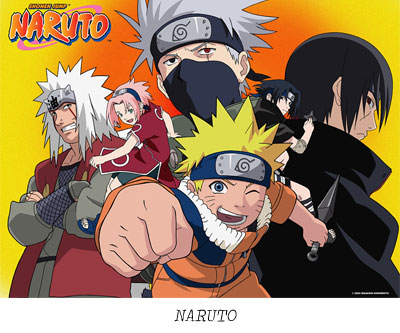 Alverson: The big story in the manga world is Naruto. Since September, Viz has been putting out three volumes of Naruto a month, and every week they show up on the USA Today booklist. Apparently people just can't get enough of Naruto.
As the early manga series start to get old, publishers are repackaging them as omnibus editions and throwing in some extras. I think we'll see more of that next year. Another trend is picking up older manga, sometimes when another publisher¹s license lapses, and republishing it in unflipped format with a new translation.
A couple of publishers are looking at manga anthologies as a way to build the audience for their titles, the way Shonen Jump and Shojo Beat work for Viz. Yen Press has one in the works, but Iris Print's BL Twist was cancelled before it launched. Meanwhile, Netcomics and Seven Seas are using the web the same way, and it seems to be working for them.
Tyrrell: I think the biggest thing about manga in 2007 was the explosion of clearly niche titles, with Viz, CMX and the others choosing to translate and release stories that don't have a chance in hell of succeeding because the conventional wisdom says they're just too weird — and seeing which ones take off. Seriously, every time Shaenon Garrity talks in her "Overlooked Manga Festival" about something new getting released, it's accompanied by phrases like "Crack-tastic" and "I SWEAR THIS IS THE ACTUAL PLOT".
This is very, very good because it's teaching an entire segment of the public that books with words and pictures can be about anything, with no spandex or capes in sight. In 2008, we'll see more of the disassociation of the words "comics" and "superheroes", which maybe opens the J-fanboys and -fangirls I see lounging in the manga aisles at my local Barnes & Noble up a little to reading stuff that didn't originate in Japan.
Spurgeon: I find it interesting that manga is going to dip back into its recent past a bit, with that omnibus format and by re-launching Slam Dunk for the North American audience. Mostly, though, I think Tyrrell has it right: the big story for a while yet is the success of niche titles as opposed to a dozen superstar series. I can’t think of anything like it.
On my web site, my continuing ignorance when it comes to manga will be the big manga story through 2008, with no end in sight.
Deppey: With all due respect, 2007 actually was the year that manga publishers got conservative and stopped trying to publish for markets that didn't exist yet. With one exception of which I'm aware — a re-release of Taiyo Matsumoto's Tekkonkinkreet — the major publishers have retreated behind the Wall of Teenage Consumers in their release schedules, and even Tekkonkinkreet is based around a new, full-length animated feature based upon same. The biggest initiative of the last year in terms of new and untested markets, such as Vertical's continuing wave of adult Tezuka books and the first volume of Keiko Tobe's series With the Light: Raising an Autistic Child (from Yen Press), came primarily from new or new-ish publishers struggling to find their places in the market.
I'm privy to a couple of possible surprises for 2008 that I can't talk about yet, but in the main I think that next year is likely to be a repeat of the last one. Success, after all, is the hardest trend to buck, and manga has been nothing if not successful.
Dijkhuis: We will all turn Japanese. Slowly but surely. Once you get beyond the surface aspects of what people think of as "THE Manga style", there's a lot to learn about layout and visual communication from manga, and I think even people who don't read a lot of Japanese comics will absorb it indirectly. I'm one of those people who still don't read a lot of Japanese comics, so I wouldn't be able to identify individual stories. Man, I'm looking really provincial here, ain't I?
Shea and Gallatin: This is a tough one because of how much the Manga style is blending with everything else. It's hard to put a finger on one thing and decide whether that's a manga story or just a story about comics. I think that's a good thing. With the availability of programs like Manga Studio I think you will see even more non-manga comics using tools that were traditionally used in manga books.
MacDonald: I predict that manga will continue to be huge – not a very bold prediction, I'm afraid. We're seeing the generation of readers who are manga-centric coming of age to produce more and more material. The biggest breakouts at the older end of this generation – Fred Gallagher, Svetlana Chmakova – are still at it, but I think we'll see more emerging talents with greater audiences.
A few weeks ago I co-moderated a "Think Future" panel on graphic novels, and everyone agreed that the next Jack Kirby might be sitting somewhere making a comic for the iPhone. The Next Jack Kirby, whoever she is, will probably be manga-influenced.
Xerexes: I always feel silly stating the obvious bit that "webcomics are comics" but yet obviously they are. Despite that there still remain some fuzzy differences between people working primarily online and others, although less so every year. Do you seen any differences anymore or have we gotten to a point where creators are more agnostic towards the various print and online options available for any particular project? And where readers (and critics) are less concerned with the format than the content of the comic?
 Spurgeon: I think one of the interesting nerd sub-culture clashes is between people who see webcomics as those projects which come out of the opportunity and culture of self-publishing that drives a big part of webcomics and those who don’t give a shit where the comics on-line come from and see Tom Toles as just as much of a web cartoonist as Randall Monroe, because their work is equally accessible on the Internet. I hope it’s a more exciting battle with more bloodshed than the clash between the traditional comics format lovers and the experimental guys Scott McCloud kept talking about. That was a dud.
I’m certain there will continue to be lingering biases between print and on-line models, mostly from folks that have investment in one or the other. I imagine it’s kind of like writing through a web site as opposed to writing for a print magazine. Ninety percent of the people I talk to for coverage purposes don’t care, but there’s always that person — usually some lady who sounds like a real estate agent — who wants to know if it’s a “real magazine” or a web site.
Comics doesn’t value making a living at comics as much as it should, so I can see various biases continuing to be a factor for years to come.
Dijkhuis: I'm certainly agnostic, as in "I don't know…". I've never been that bothered about how I consume comics, and some of my favorite print comics, like Fokke & Sukke who I mentioned above, have been online since the 1990s, simply because it was convenient for the creators to put them online – same as it was for me way back when.
Still, I often wonder what the point of print is. IF you don't mind much how you enjoy your art, then why fill your house with *stuff* if you can get it online? As I've been telling people for years, printed books ARE stuff, just like all the other stuff in your home is. They take up space, have t be moved around when you move house and, given enough time, will start smelling bad and harbouring dust mites and fungi. Their only real value is in their content, and that can often be had elsewhere. On the other hand, I've been doing just that lately, buying content packaged as ink on paper, and enjoying the higher resolution and convenience a lot. Also, there is still a cultural gap between what is and isn't online, and it so happens that the expected quality of print comics is still higher.
For my own comics, I'm keeping my options open. If there is a chance of me selling enough print copies of my work to make a profit, I'll probably do it, and enjoy the side benefits of higher-resolution reproduction and what still feels like membership of an elite. It's not a high-priority thing though.
Badman: There seems to be a lot more fluidity between web and print comics lately with some of the ACT-I-VATE folks having pamphlets through Image or the wild success of the Perry Bible Fellowship book or artists who do print comics moving into webcomics. We see this blurring boundaries in lots of other areas like tv, movies, and books, though comics are a little further ahead in that regard as there are a lot more native webcomics than there are web-tv, web-movies or even web-books.
Tyrrell: People that actually make comics on their own don't see any differences, and their readers don't care about the format as long as it's convenient to read. The big publishers mostly don't get it, but you're starting to see some signs of hope there — if Dark Horse, say, treats Joss Whedon's & Fabio Moon's Sugarshock (which wouldn't have been out of place in something like a FLIGHT anthology) as more than a one-off promotional deal, then we'll know we've turned the corner.
MacDonald: I think we're really getting there. Basically, we have yet another iteration of the "Satisfying Chunk Theorum." This is a theory I've been passing around for 20 years or so — basically a reader must feel that have received a satisfying chunk of story (or poetry, or IP) for their money, or a product will ultimately fail. With webcomics you basically substitute "time" for "money" in the equation. People who feel they have gotten a quick hit of laughter or story that is worth the time it takes to find it — something that is more rewarding than hitting Facebook or Boing Boing again — will keep coming back. Obviously there are many people who get a hit on the web, but the success of PBF and MegaTokyo in print (and many others) shows that the content is multi-platform.
Deppey: Despite a recent upturn in sales for lesser-known titles in the Direct Market, I'm not convinced that said market is any less hostile to comics that don't fit its hardcore-nerd mandate than it ever was. For that reason, folks who might've been looking at print self-publishing ten years ago — and more than a few currently in such trenches now — are likelier than ever to see online serialization as a viable alternative to the print variety, simply because the opportunities in the latter remain so godawful. Really, the Web is very nearly the only game in town; I mean, if Dark Horse realistically could have published Dark Horse Presents on paper, it seems obvious that they'd have done so. While the number of people who've figured out how to use the Web to build an audience for the eventual series of books remains fairly small, it's nonetheless growing at a steady clip, which is more than you can say for anything carrying staples.
Alverson: I agree with Dirk. Periodical comics are all but invisible to the vast majority of potential readers, but everyone uses the web. That, combined with the low cost of entry, makes it a logical alternative to the monthly 22-page comic. A trade that comes out once a year is not going to build a following; a webcomic that updates daily or weekly will keep readers interested and build demand for the print comic, which the will happily pay for. I don¹t see too much of a future for periodical comics outside the superhero genre.
Xerexes: Without limiting things to webcomics what do you think the biggest stories in comics were this past year (and how much, if any, does the web show up in those stories)?
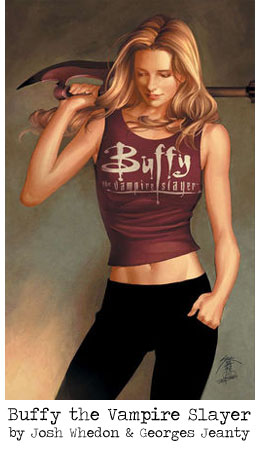 Deppey: We're in the middle of a grand, sweeping upheaval in the comics industry that will likely take several more years to fully get a handle upon. Much of it is already visible, of course: The rise of the bookstore market for graphic novels (and media profile for same), continued inertia on the newspaper funny page (and financial instability of newspapers in general), growth in manga and online comics, to name a few. Much of what we saw this year have been a continuation of existing trends — even the explosion of Islam-related censorship in comics only comes as a surprise to people who've forgotten Salman Rushdie, or have never heard of Theo Van Gogh. We'll see further high-profile stories in 2008, of course, but the seeds for them have already been sown, I suspect.
For me, the biggest news of 2007 may well be the success of softcover books collecting stories based upon the existing properties Buffy the Vampire Slayer and The Dark Tower, which point to a potentially sizable market for genre comics that don't feature vigilantes in their underwear — a market that may well tempt Marvel toward a major publishing push involving books not featuring superheroes. THAT would be news.
Spurgeon: The big story for me remains the explosion of censorship and hysteria regarding cartoon imagery in places like Bangladesh, India and perhaps scariest of all, Spain. The maturation of the North American book publishing market for graphic novel material is another — the kind of material being bought, and from whom. The nature of the latest comics boom worldwide and the ways that comics isn’t prepared for sustaining that success due to things like over-publishing and keeping the avenue for deep catalog sales in a constantly fragile state is another. DC Comics’ inability to shift its event-comics momentum into sales of its regular titles is a huge story for that part of the industry. The way that replacements for FoxTrot’s slots in the newspaper went to a variety of strips instead of a new hit or two was a fascinating snapshot of that market. Jay Kennedy’s passing. Chattanooga losing Bruce Plante but gaining Clay Bennett and a general sense of a bottom being reached in terms of editorial cartoonist attrition.
Dijkhuis: Again, what Tom said, though I'd argue that the increasing censorship of cartoonish expression is part of a larger movement towards a culture of manufactured outrage followed by repression. I don't think there's a single instance where someone was outraged by a cartoon, or comic, or a musical, that there wasn't someone involved who had been patiently waiting for an opportunity to get outraged and helping that opportunity along.
Tyrrell: Buffy Season 8 has the potential to change how cult properties get treated in future. I mentioned Fabio Moon before, and I'm going to again. These past few months, I'm seeing Moon and his twin brother Gabriel Ba's names everywhere. I think they're the most promising talents of the decade. The webcomics retrospective at MoCCA (you still have time to see it) hit much, much bigger than I hoped. The differences between webcomics and traditional comics has blurred so much that it's largely a matter of semantics.
The McCloud Family Death March set the bar for all future promotional junkets. More importantly, I'm certain that Scott's creative juices got good and agitated just hanging around and talking with so many creative people in such a concentrated form for so long. Having seen him in large- and small-group dinners a couple times during the tour, I could practically see the ideas churning in his skull. His graphic novel is gonna be awesome.
As mentioned before, the Modern Tales/ComicSpace merger has huge potential for next year and beyond. A number of more mainstream news outlets started spreading news of webcomics to the wider world: Lev Grossman at Time and the Daily Telegraph (UK) come to mind, and there were others in there.
Badman: The number of comics stories I've heard on NPR this year. The explosion of reprints of old comic strips and comic books. History is starting to get its due, and I think that can only bode well for the future (learn from the past).
 Alverson: I think the trend of prose writers like Stephen King making comics is huge. There are lots of projects in the works, and if they are marketed well, they can bring more readers to comics and more comics readers to the prose work as well. Tokyopop is working that strategy pretty hard in the young adult department, and their manga based on the Warriors young adult novels was the first global manga to crack the USA Today booklist.
And that's the second big story: The increasing acceptance of global manga. Just a few years ago, many critics turned up their nose at non-Japanese manga, but now sites like Manganews are reviewing it, and publishers like Del Rey and Go!Comi, whose bread and butter is licensing quality manga from Japan, have projects by non-Japanese creators in the works. What I think this means generally is a loosening of boundaries and a much bigger market for creators, as their work sits on the shelf next to wildly popular books like Naruto.
MacDonald: I do think that the move to monetize comics on the web was the biggest story of the year, although the jury is out on all the initiatives. The other big story of the year was continuing success and acceptance with graphic novels in bookstores, with 300, Dark Tower, Buffy, Diary of a Wimpy Kid, Naruto, Black Dossier, the PBF collection, an probably about a dozen books I'm forgetting selling in respectable to spectacular quantities.
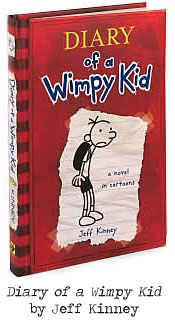
The biggest story of the year that no one has talked about is probably Diary of a Wimpy Kid which started as–GOOD GRIEF!–a WEBCOMIC. This book has sold MORE COPIES THAN SOME VOLUMES OF NARUTO. I'd estimate that there are at least half a million copies of this book in print, and it has been on the NY Times bestseller list since MAY. It is a megahit. And what can we learn from it? Like manga, it's a book that speaks directly to its target audience — middle-graders — about the foibles and insecurities that hit them every day. It's a ground-zero hit. I'm not in the least bit shocked to find out that a humorous kid's comic is the biggest seller of the year. That's a no-brainer. If Marvel, Zuda, ComicMix and Platinum really wanted to make money this is where they would be going.
Shea and Gallatin: Well there's the Funky Winkerbean breast cancer storyline, and that For Better or For Worse creator Lynn Johnston announced that she was going into semi-retirement. The big webcomic stories like the changes to the Blank Label Comics collective and the new Halfpixel.com didn't really measure in the mainstream media. So maybe the only BIG stories were that DC and Marvel threw their very different hats into the webcomics ring.
Xerexes: I used to ask a question in past roundtables about whether the medium of webcomic grew in the past year or not, but I think this year it may be better to ask about comics as a whole. Do you think the medium of comics grew over the course of 2007 or did it hold steady? What changed for the better and worse and who were the people contributing to that?
Tyrrell: There's no one answer there. Traditional superhero comics are wheezing from one publisher-wide crossover stunt to the next; manga translations are through the roof; we keep getting more terrific original graphic novels; we're starting to get more Eurocomics on this side of the pond; and every time I step into my LCS (Midtown Comics, Times Square), I see more and more webcomics reprints on the shelves.
Dijkhuis: Incremental growth for webcomics, not much to report on otherwise. Print comics in the Netherlands and Belgium have seen further contraction of the market, with more publishers dumping their stock and reducing their opportunities for artists to be published – or at least, that's been my perception, which is heavily influenced by the collapse of one magazine that I was in. Or at least, that's my impression, which is at best semi-informed, and that impression is strictly limited to the market side of things. The culture of comics here has seen some positive developments over the past few years – not just the rise of webcomics but also an expansion of opportunities for artists to teach about comic creation in the classroom. This could result in an increase in the talent base in the next few years.
Spurgeon: I don’t think I know what the question means, but let me try. In terms of being a consumer, this is the best time ever to be a reader of comics. In terms of the medium growing artistically, I think there’s at once more great work and also more incentive to settle for not doing great work, which makes me wonder if there will be fewer great works from fewer new cartoonists as the years pass. I’m afraid that no matter what the overall growth is like, not enough money from that growth is being returned to the cartoonists, and that no one seems to care about this, and that 15 years from now all we’ll be doing is raising money for cartoonists who are broke and need the cash.
Badman: I think that would depend on what aspect of comics one is considering. Certainly in the "mainstream recognition" and "publishing" sense there have been changes (for the better, I think). In the sense of new and innovative uses of the form, not so much. Where are the experimenters and innovators? Where are the critics and theorists? For the worse, Sturgeon's law still holds true.
Deppey: Strangely enough, I think I fall exactly on the opposite end of Tom's pessimism. Thanks to the rise of the bookstore market, there's greater financial incentive to earn decent royalties from niche-market graphic novels — from Minx and Scholastic's youth-oriented approach, to tie-ins for things like Halo and Dark Tower, to high-concept items like the 9/11 adaptation — and while I can see why Tom might see this as a distraction from great art (if I have his argument correct, and I'm not quite sure that I do), I think that building a wider base of support among the greater public will be far better for the industry in the long-term than the publication of a hundred Mauses and Fun Homes. What we need more than anything right now is a diverse, wide-ranging appeal to as many different kinds of readers as possible; the single biggest weakness in the North American comics industry — the reason that manga publishers continue to whip them like ugly dogs — remains the sharp divide between literary comics and the One True Genre, superheroes. That this divide is being filled by traditional prose publishers rather than longtime comics publishers is telling, but I'm all in favor of whatever gets us there.
Alverson: I think the medium is growing in a very significant way: People who never read comics before are picking up comics because they are interested in the content as much as the medium. I mentioned that a number of fiction writers are making comics based on their work, and I think readers have also been drawn titles like Cancer Vixen, American Born Chinese, and Fun Home because of what they are about as much as how they are presented. Dirk mentioned With the Light, the story of a family with an autistic child; from trackbacks and comments to my own review I know it is being read by people who are interested in autism, people who may have seen manga before but never read one until they were struck by the subject of this one. This is happening in part because the marketing folks are sending out review copies to the mainstream press, getting those NPR stories, and placing the books where readers can find them.
Shea and Gallatin: I think things have grown. It used to be that I would pick up good new comics maybe once every 6 months and be hooked on it. Lately though I have felt like good projects are coming out of everywhere. Some real veterans have picked up new projects. Pro artists are dipping into webcomics and doing great things and projects like Comicpress (the webcomic-specific theme for the blogging software WordPress) are making it easy for people to independently publish online. It's been very exciting.
MacDonald: I'm somewhere between Tom and Dirk. It's an incredible time to be reading comics, but some people are being squeezed out: ephemerally beautiful indie work is not a huge moneymaker in any medium, and comics are no different. However, we are getting to a place where this kind of material has an audience that can support it. It's all about getting it in front of the right people and maintaining the delivery system.
Comics grew in that a lot of genres and formats that have been considered unmarketable are slowly beginning to be marketable again (see kids comics and humor comics, above.) It grew in that we have generations of cartoonists who are influenced by really good literary comics and not superhero comics, and the work is getting more and more interesting and nuanced. People are taking creative chances.
The other thing that is awesome is that you have generations of cartoonists coming out of SVA and CCS and MCAD and SCAD who are being taught by really good cartoonists who grew up on the good stuff, so there is a real lineage of craft beginning to assert itself as well. The kids getting out of art school are years beyond where the kids used to be in terms of savvy and awareness, and while they still have a lot of seasoning to get under their belt, I think they will take the medium to places we've never dreamed of. The only problem is finding a place for them to get that seasoning. (Turning out two mini comics a year is not going to teach you the things you need to know to be a great cartoonist.) And that is where the web will come in.
Xerexes: Everyone here writes about comics — looking back on what you wrote this year, what was your favorite piece and also, what piece provoked the largest response from readers?
Alverson: I'm lucky that I get the opportunity to write longer pieces in addition to my regular daily blogging. My favorite piece was the article I wrote about British girls' comics for Newsarama. All the other girls my age gave up on comics when they outgrew Richie Rich or someone told them that Superman was only for boys, but I had years and years of great comics about spunky girls having thrilling adventures, usually at boarding school. It was great to share that with the rest of the world. But the piece that got the most reaction was the one I wrote on MangaBlog in March, titled "Missing the Paradigm Shift", about the way the comics world has grown, and superheroes are now just a small part of it. I thought I was stating the obvious, but the piece drew a lot of interesting comments.
Badman: My favorite piece… perhaps my column (at ComixTalk) on a page by Jaime Hernandez, or an article I wrote on Frank Santoro's work that is hopefully coming out in print sometime soon or maybe my review of Hope Larson's Gray Horses. I'm happy to get any response, and I don't tend to get much except from my regular readers (who tend towards the experimental/theorist side of comics).
Tyrrell: Biggest response is easy — the Dave Kelly/Todd Goldman dustup back in April, when the lawsuit threats went a-flyin'. As I write this, it is day #213 since we asked Goldman's lawyer precisely what we wrote that was objectionable, and day #213 of waiting for a response.
My favorite piece will be the one I write tomorrow, to be surpassed by the one the day after that. It amazes me that anybody actually reads this stuff or cares what I have to say.
MacDonald: Do I really have to answer that question? (Sigh.) I think my posts on the various women-in-comics controversies this year ("Night of the Feminazis Parts 1 and 2") turned out pretty good, and I wish I'd gotten around to writing the third part, which had the opening line "Women like a lot of crap." One of these days. As for reaction, the post which shall not be named is still being made fun of and parodied and passing allusions are being slipped into other reviews two months later. Thanks to me, C.F. is known worldwide as the best letterer in contemporary comics! I succeeded in touching a nerve, but I wish I had been able to use a surgical steel needle instead of a rusty poleaxe, but I do stand by what I said, and hope to return to the themes raised at some point in the near future. Onward and upward with the arts!
Dijkhuis: I haven't written that much about comics lately, but I think my posts about Project Wonderful earlier this year got a lot of attention, because PW seemed to be a big story last year. With hindsight, it probably wasn't; it's just another useful but unreliable tool in the web publisher's toolkit.
Shea and Gallatin: Earlier in the year, we did an interview with Mike Maihack of Cow & Buffalo that got a great response and we also really enjoyed talking with Brian Anderson of Dog Eat Doug. More recently, we got a lot of interest in our interviews with Nate Piekos of Atland and Howard Tayler of Schlock Mercenary. Finally our involvement with the WCCA (Web Cartoonist Choice Awards) at Megacon was great as well.
Xerexes: Give me a bold prediction about webcomics for 2008.
Badman: My webcomic will suddenly become extremely popular… that's bold… realistically… more great webcomics. More experimentation with form, more experimentation with technology, interface, serialization, links, layouts, text, design, color, theme.
Spurgeon: A general downturn in the economy combined with the further development of opportunities for traditional media sources on-line is going to have a drastic impact on on-line advertising sales for anyone not aligned with a major company. Tough times ahead.
Shea and Gallatin: Cloning, and sprite comics will be accepted as the one true webcomic art form (as they actually work on Mobile phone screens). And people will start to just think of the art form as "comics" and the individual mediums as just a way to read them.
Alverson: I don't see any drastic changes ahead. People will continue to experiment with different ways of presenting comics and making mone from them, but only a few will be able to quit their day jobs.
MacDonald: Some smart publisher is going to realize that webcomics are the next Garfield, and make lots of money for everyone. It is inevitable. I'm shocked that no one has been smart enough to see that yet.
Tyrrell: Having exhausted all other challenges, Ryan Estrada will perfect a computer-brain interface (probably co-developed by Randall Munroe and Ryan North) that will allow him to draw webcomics directly onto the Internet with lasers by thinking about them. "Estradarama 2008", will shatter its previous record of four dozen guest strips by an order of magnitude. This will provoke me to buy my fellow panelists a round of very good cocktails at the Pegu Club in Manhattan while we bitch about having to double-check all the URLs.
Dijkhuis: Ryan Estrada will do what Gary Tyrrell just said he would do… but he will still get his Wikipedia article deleted.
Seriously, though, webcomics artists should prepare for an advertising crunch driven in part by an erosion of trust in the intentions of ad providers. Web ads have been riding high lately; they're not going to go on riding high.

Comments are closed.